Approaches
Sytems analysis
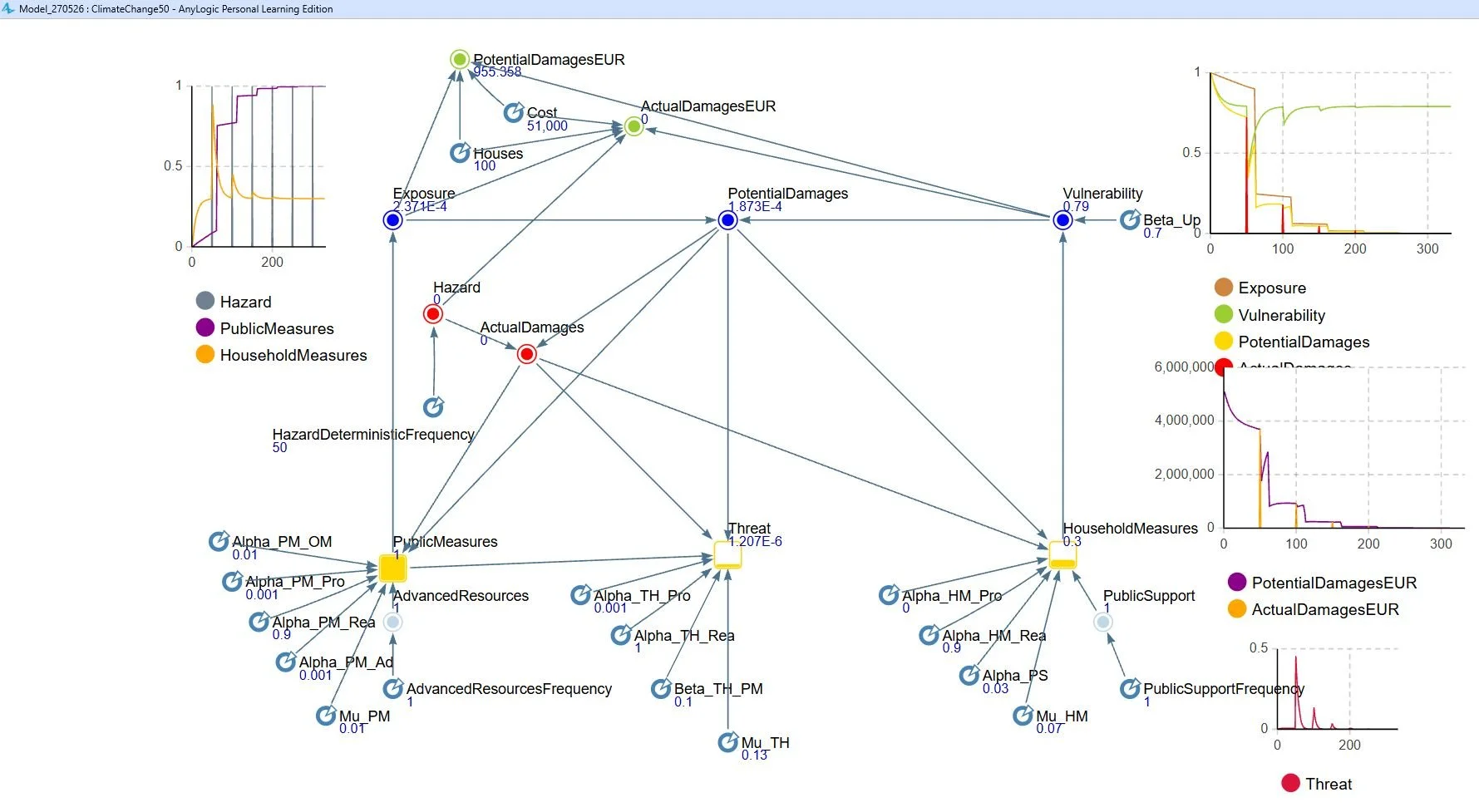
By identifying the elements in the system, and examining their interconnections, new insights are developed on how the holistic human-water system is functioning and where adjustments can be made to achieve objectives. Both qualitative and quantitative approaches structure systems analysis. Robust theory underpins empirical analysis. Data collection and data harvesting enable the direction and speeds at which processes take place to be estimated. Developing (with stakeholders) conceptual, systems dynamics and agent based models ensures that relationships are accounted for and made transparent.
Evaluation
For advancing human-water systems, evaluation is about identifying future change. It’s about working with stakeholders to test which actions drive the system to achieve a desirable vision of the future. It’s about determining which processes are driving which outcomes, and why. It’s about comparing between costs and benefits of different strategies. And including unplanned positive outcomes (e.g. stronger and more diversity in social networks, more creative solutions) in the holistic evaluation process.
Evaluating Stakeholder Participation in Water Resource Management
Reporting and learning
Written reports and papers explaining findings and plans are essential – and they are a key element of project communication output. However, it’s also important to emphasise the importance of collaborative work for learning throughout the research process. The new insights generated by a project, live not only on the paper, but in the actions taken by the people involved. This process drives change by stimulating new ideas and strategies, generating creative solutions for challenges, and identifying and planning future work.
Learning in an Interdiscipinary Research and Education Programme
